Antibiotic Eye Drops: Essential Care for Eye Infections

Antibiotic eye drops are specialized medicated solutions designed to treat and prevent bacterial infections of the eye. These drops contain antibiotics that help eliminate harmful bacteria, reducing redness, pain, swelling, and discharge caused by infections like conjunctivitis (pink eye), keratitis, or blepharitis.

How Antibiotic Eye Drops Work

When applied to the eye, these drops deliver antibiotics directly to the site of infection, ensuring rapid action. They inhibit bacterial growth or kill bacteria, helping the eye heal faster and preventing complications such as spreading of infection or vision impairment.

Common Uses

Antibiotic eye drops are typically prescribed for various bacterial eye infections including:

  • Bacterial conjunctivitis (pink eye)

  • Corneal ulcers or keratitis

  • Eye infections following surgery or injury

  • Blepharitis and other localized infections

Safe Usage and Precautions

  • Use strictly as prescribed by a healthcare professional.

  • Complete the full course to avoid resistance.

  • Avoid contamination by not touching the dropper tip.

  • Inform the doctor if allergic reactions or side effects occur.

Advantages of Antibiotic Eye Drops

  • Targeted and effective treatment.

  • Minimal systemic side effects due to localized application.

  • Fast relief from infection symptoms.


For detailed product offerings and more information, you can visit the Antibiotic Eye Drops category on IRX Pharmaceuticals’ website.

Protecting Your Eyes from Blue Light: Tips for Digital Screen Users

In today’s digital world, we spend hours in front of screens—computers, smartphones, tablets—which emit blue light. While blue light helps regulate our natural sleep-wake cycle during the day, excessive exposure, especially at night, can cause eye strain, discomfort, and potentially affect sleep quality.

What is Blue Light?

Blue light is a high-energy visible (HEV) light emitted by digital screens, LED lighting, and the sun. Prolonged exposure to artificial blue light may lead to symptoms of eye strain, dryness, blurred vision, and headaches.

How to Protect Your Eyes from Blue Light

  • Use Blue Light Filters: Many devices have built-in blue light reduction settings or apps.

  • Wear Blue Light Blocking Glasses: Special lenses can filter harmful blue light and reduce eye strain.

  • Follow the 20-20-20 Rule: Every 20 minutes, look at something 20 feet away for 20 seconds to relax eyes.

  • Adjust Screen Brightness: Keep screen brightness comfortable relative to room lighting.

  • Take Regular Breaks: Frequent breaks reduce continuous exposure and eye fatigue.

Additional Tips for Healthy Digital Eye Care

  • Maintain proper distance (about an arm’s length) from the screen.

  • Blink often to keep eyes moist.

  • Use artificial tears if eyes feel dry.

  • Ensure good ambient lighting to avoid glare on screens.

Conclusion

With awareness and simple habits, digital screen users can protect their eyes from the potential harmful effects of blue light and maintain sustained eye comfort and hea

Antioxidants for Eye Health: Protecting Your Vision Naturally

Our eyes are precious organs that allow us to see and experience the world around us. With age, environmental factors, and lifestyle choices, our eyes can be exposed to oxidative stress—a process that damages cells through harmful molecules called free radicals. This is where antioxidants play a vital role in maintaining and protecting eye health.

What Are Antioxidants?

Antioxidants are natural compounds found in many foods, especially fruits and vegetables, that neutralize free radicals and prevent cellular damage. Common antioxidants beneficial for the eyes include vitamins C and E, zinc, lutein, zeaxanthin, and beta-carotene.

How Do Antioxidants Benefit Eye Health?

  1. Protect Against Age-Related Macular Degeneration (AMD):
    Studies have shown that antioxidants can slow the progression of AMD, a leading cause of vision loss in older adults. Lutein and zeaxanthin, found in leafy greens, collect in the retina and act as protective pigments.

  2. Reduce Risk of Cataracts:
    Oxidative damage to the lens of the eye can lead to cloudiness and cataracts. Antioxidants such as vitamin C and E help reduce oxidative stress, lowering cataract risk.

  3. Combat Blue Light Damage:
    Exposure to blue light from screens can generate free radicals in the eyes. Antioxidants absorb and neutralize some of this damage.

Foods Rich in Eye-Healthy Antioxidants

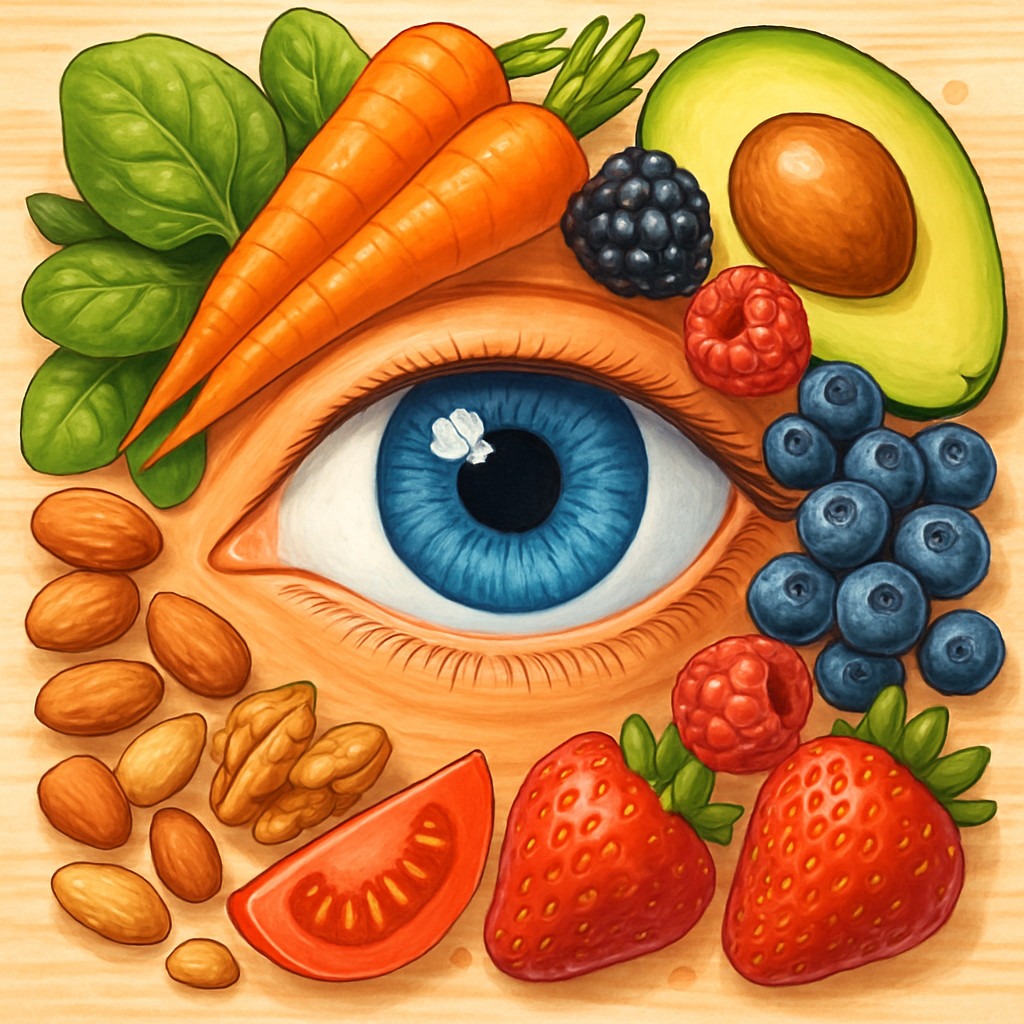
  • Leafy greens like spinach, kale, and collard greens (high in lutein and zeaxanthin)

  • Colorful fruits such as oranges, berries, and kiwi (rich in vitamin C)

  • Nuts and seeds like almonds and sunflower seeds (contain vitamin E)

  • Carrots and sweet potatoes (beta-carotene source)

  • Oily fish like salmon (high in omega-3 fatty acids that complement antioxidant action)

Supplements and Eye Health

When dietary intake is insufficient, antioxidant supplements formulated for eye health can provide added support. Always consult an eye care professional before starting any supplement, especially if you have underlying conditions or take other medications.

Conclusion

Incorporating antioxidants through a healthy diet and lifestyle can offer significant protection to your eyes against age-related decline and environmental damage. Prioritizing eye health today helps preserve the gift of clear vision for years to come.

Add to cart