
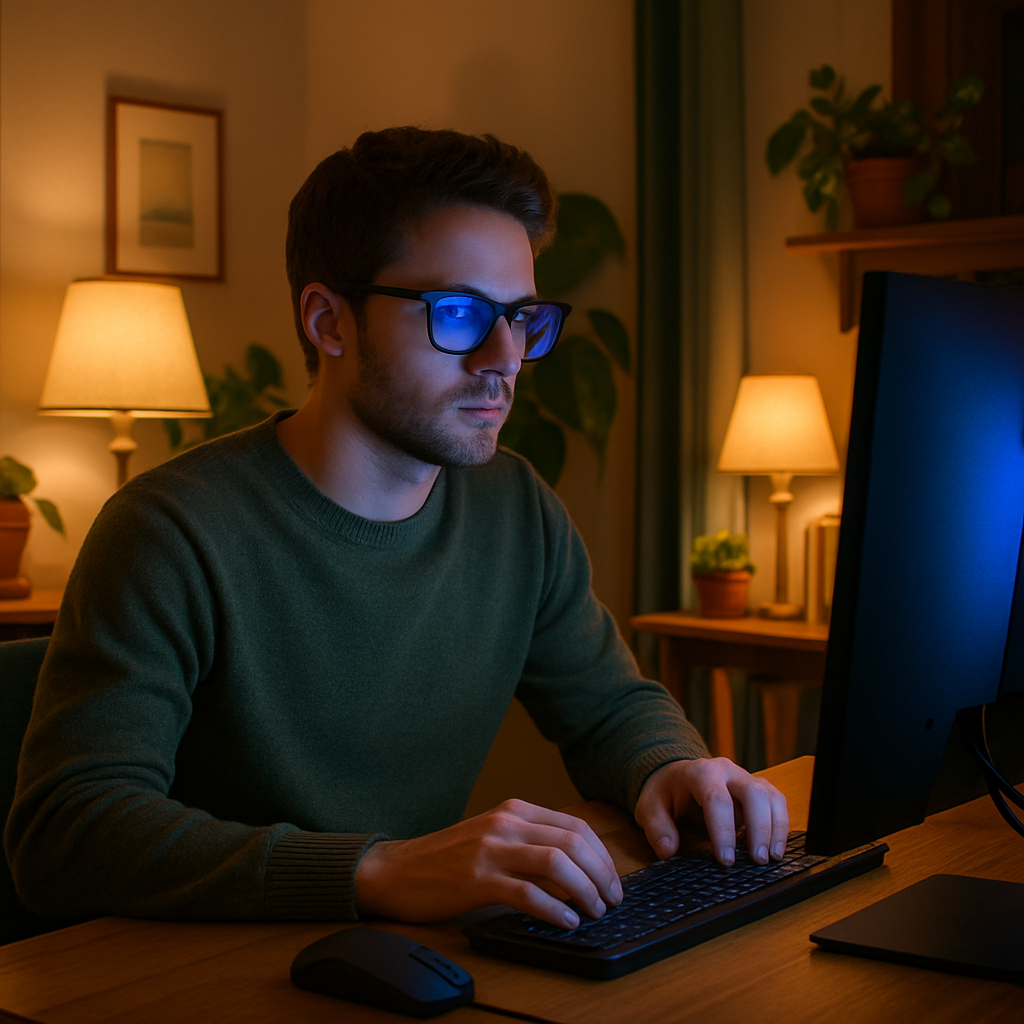
Protecting Your Eyes from Blue Light: Tips for Digital Screen Users
In today’s digital world, we spend hours in front of screens—computers, smartphones, tablets—which emit blue light. While blue light helps regulate our natural sleep-wake cycle during the day, excessive exposure, especially at night, can cause eye strain, discomfort, and potentially affect sleep quality.
What is Blue Light?
Blue light is a high-energy visible (HEV) light emitted by digital screens, LED lighting, and the sun. Prolonged exposure to artificial blue light may lead to symptoms of eye strain, dryness, blurred vision, and headaches.
How to Protect Your Eyes from Blue Light
-
Use Blue Light Filters: Many devices have built-in blue light reduction settings or apps.
-
Wear Blue Light Blocking Glasses: Special lenses can filter harmful blue light and reduce eye strain.
-
Follow the 20-20-20 Rule: Every 20 minutes, look at something 20 feet away for 20 seconds to relax eyes.
-
Adjust Screen Brightness: Keep screen brightness comfortable relative to room lighting.
-
Take Regular Breaks: Frequent breaks reduce continuous exposure and eye fatigue.
Additional Tips for Healthy Digital Eye Care
-
Maintain proper distance (about an arm’s length) from the screen.
-
Blink often to keep eyes moist.
-
Use artificial tears if eyes feel dry.
-
Ensure good ambient lighting to avoid glare on screens.
Conclusion
With awareness and simple habits, digital screen users can protect their eyes from the potential harmful effects of blue light and maintain sustained eye comfort and hea